
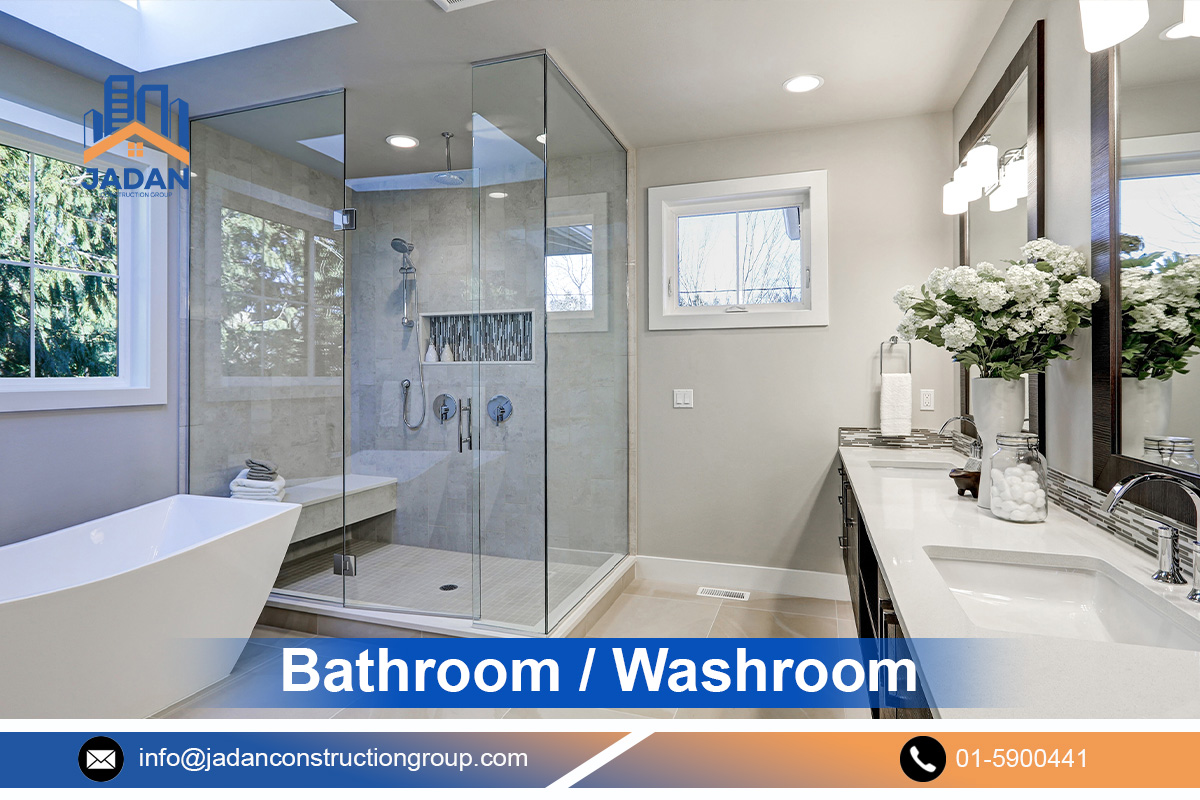
Bathroom planning is one area where small early mistakes can really hurt later on. For example, if the bathroom door swings directly onto the bed, if the drainage is incorrectly designed, or if the bathroom is incorrectly placed on the wrong wall of the house, these are problems that hurt after the fact, when the tiles are in and the plumbing is installed.
Vastu Shastra is similar in its approach to bathroom planning as it is to design in general: it considers hygiene, air circulation, energy flow, and how bathroom spaces relate to the living spaces around them. While the principles are not complex, they must be considered early on in the design process.
In Nepal, houses are similar in many ways, from a one-story house in the Terai to a four-story house in Kathmandu, with attached bathrooms in each bedroom, limited space on each floor, and plumbing that runs vertically through multiple floors. If you get the direction and internal planning of your bathroom right from the start, you will protect your home's energy and plumbing for years to come.
Best Direction for Your Bathroom or Washroom
In Vastu, the bathroom is considered an area where energy leaves the home, and its placement relative to other rooms is very important.
Northwest: The number one suggestion for the position of the bathroom/washroom. Northwest is associated with the concept of moving and leaving. A bathroom located in the northwest corner sits comfortably and does not clash with the energies in the other rooms.
West and South: If the Northwest position is not feasible, the West and South positions are the next-best choices. Both are considered neutral/heavy in Vastu and are appropriate for the bathroom's nature. In many Nepali homes with multiple floors and plumbing that is more efficient when bathrooms are stacked, the West and South positions work well on all floors.
Avoid the following positions for the bathroom/toilet: the northeast corner must never be used. This is the most spiritually sensitive area in the home and should be light and open, preferably reserved for a Puja Room/Sitting Area. The East direction must also be avoided because it is associated with the rising sun and needs to be kept clear of bathrooms. Another position to avoid is the Brahmasthan area in the middle of the home, which needs to be kept open and unobstructed.
Toilet Seat Direction: The Quick Answer
This is one of the top Vastu questions that people ask in Nepal, and the answer is quite straightforward.
Best direction: The toilet seat must be positioned so that the person sitting on it faces north or south. Facing north is the best direction and is recommended in Vastu because it aligns with the earth’s magnetic field and is the direction the body naturally eliminates waste.
Avoid these directions: The toilet must not be placed so that the person faces either the east or west, because the former is the direction in which prayer is offered, and the latter is significant too.
Placement inside the bathroom: In addition to direction, the toilet must not be placed directly in line with the bathroom door, as the person entering the bathroom and facing the toilet directly is not recommended in Vastu and is not aesthetically pleasing either.
Placement of Sink, Shower, and Drain
Making the bathroom feel right begins with giving each piece its own small priority, rather than looking at the room as a whole.
Sink Placement: Try putting the sink in the north or east wall. This direction is fresh and revitalising and is good for the washing area. It is best not to place the sink in the south wall.
Shower and Bathing Zone: The shower or tub area needs to be placed in the east or north part of the bathroom. In many Nepali homes, the day begins with a morning wash. Placing the bathing area in the east direction keeps this fresh energy flowing through the day. If possible, the bathing area needs a window facing east. This allows the morning sunlight and warm rays into the bathing area.
Drainage Logic and Slope: The drain needs to be placed in the north or east part of the floor. The floor needs to be sloped toward the northeast or north so the water runs down and away from the denser south and west walls. This means the floor is highest in the south or west part and lowest in the north or east part, where the drain is located. This is a small element, but it can be a real pain to fix once the floor is poured.
Ventilation and Natural Light: Every Nepali bathroom needs a window or a mechanical ventilator. Lack of ventilation is one of the biggest problems in the bathroom. A window facing east is best. If this is not feasible, such as in the interior apartment bathrooms, then a mechanical ventilator needs to be placed high on the wall.
Attached Bathroom Vastu: The Most Common Setup in Nepal
Most Nepali houses with bedrooms now have an en-suite bathroom, and this is where most practical Vastu questions come into play.
Where attached bathrooms work: If the bathroom is located on the west or northwest side of the bedroom, this tends to work nicely in Vastu as well. This placement keeps the bathroom away from the spiritually active zones of the bedroom, namely the east and northeast sides, so that the bedroom maintains a balanced, peaceful, and calm energy. To learn more, please read our bedroom Vastu guide in Nepal, where we go into more detail on the rules that apply to the bedroom.
Problems with attached bathrooms: The two most common problems with attached bathrooms in Nepali houses are: the toilet door facing directly into the bedroom, and the bathroom wall sharing space with the puja room. A toilet door facing the bed head is not good, as this affects the peacefulness of the sleeping area, which is not good, Vastu or good interior design. A bathroom sharing a wall with the puja room is one of the worst combinations in Vastu, so if you are planning a new house, please ensure that the toilet and puja room are separated by at least one room, or a wall, but not a shared wall! To know more, please read our puja room Vastu guide in Nepal, where we go into more detail on this.
Quick fixes for attached bathrooms: If the toilet door faces directly into the bedroom, a partition, screen, or a smartly placed wardrobe can be a quick solution without any renovation costs! Just ensure the bathroom door remains shut at all times, as this is one of the simplest yet most effective Vastu solutions for attached bathrooms!
Common Bathroom Vastu Mistakes in Nepal Homes
These issues come up again and again, and with a little foresight at the right moment, most of them can be avoided.
First off, ventilation is a problem in many bathrooms, especially those with only a small vent or no exhaust fan. In Nepal’s climate, especially in the monsoon season, this is not just a nuisance; it’s a structural problem.
Dampness and water leaks are another problem many bathrooms face, especially if the damage is not addressed early. A small, slow leak in a bathroom’s floor or wall may not be a problem at first, but it can affect the structural integrity of the surrounding area, according to Vastu, because it signifies leaking energy in the home. Waterproofing is always cheaper than fixing water damage later.
Another problem is in the design, such as a bathroom door facing a bedroom, the kitchen, or the front door. According to Vastu, a bathroom door should ideally open onto a neutral wall, not directly onto a bedroom, dining area, or front door.
Many people also do not realize the importance of keeping broken fittings in order, such as a cracked toilet cistern, a leaking faucet, or a broken mirror, because according to Vastu, this signifies stagnant and leaking energy in the home, and replacing them is a simple way to correct this problem.
Practical Fixes if Your Bathroom Is in the Wrong Direction
However, if your bathroom is not in the right direction, there are certain changes you can make without tearing it down. Ensure the bathroom is always dry, well-lit, and well-ventilated—this is the easiest and most important Vastu tip for correcting the bathroom's direction. A dry, well-lit, and well-ventilated bathroom greatly reduces the directional disadvantage.
If the door in your bathroom is aligned with the direction of your bed or the puja room, place a screen or curtain in front of it. A frosted glass screen, a tall potted plant, or a wooden screen would be good choices for this purpose.
For bathrooms located in the northeast, this is the trickiest position. Keep the bathroom simple and well-ventilated. Paint the walls and floor in light colours and place a bowl of salt in the corner of the bathroom. This is a popular Vastu tip for correcting the bathroom's direction. It does not completely cure the directional disadvantage, but considerably lessens its effects.
You can also change the direction in which the door of your bathroom opens. If the door opens toward your bed or puja room, changing its direction can be a good idea.
Conclusion
The wet areas seem to be the troublemakers when it comes to long-term maintenance if they’re not thought through from the beginning. Get the bathroom in the wrong spot, add in a poor drainage slope, forget the ventilation, and finish it off with a door that puts you directly on the bed, and you’ll be creating daily troubles that add up over the years. Figuring these things out early on costs you nothing and saves you a world of problems later.
Vastu for bathrooms is simply the application of good construction principles, such as the placement, ventilation, drainage, and layout between rooms. These concepts work in harmony when they’re aligned.
At Jadan Construction Group, we treat wet areas such as bathrooms, washrooms, and toilet rooms with the same respect as any other room in the home. The details that we nail in the drawing phase are the ones that keep your home comfortable for the next several decades.
Let’s get it right from the ground up. Once you’re ready to get started, we can work with you to design your home, including spaces such as bathrooms, that incorporate Vastu principles.
Frequently Asked Questions
What is the best direction for a bathroom in Nepal?
The ideal place is the northwest corner of the house, which can be used as the bathroom or washroom. The next best options are the west and south directions, but not the northeast, east, or the centre of the house.
Which direction should the toilet seat face?
The toilet's face should be towards the north or south when you’re seated on it, and the best direction is north. The toilet's face should not be towards the east or west.
Can an attached bathroom door open directly into the bedroom?
Yes, it is okay to have an attached toilet in your bedroom, and it is quite common too, according to Vastu. However, the toilet door must not be directly opposite the bed in the bedroom.
Can the toilet be near the puja room?
In Vastu, it is strongly not recommended that the toilet and the bathroom be on the same wall as the puja room, above it, or below it. However, if your home is already designed in such a way, you can mark the wall with a sacred symbol and burn incense sticks regularly, and keep the toilet and the puja room spotless. The best solution is to design the separation of the two rooms right from the beginning.
What should I do if my bathroom is already in the wrong direction?
The best solution is to keep the bathroom dry, airy, and bright. A partition can be erected to block the line of sight between the bathroom door and the bed and the puja room. In the case of the northeast direction, light colors and maximum ventilation can be achieved with minimal decor.