
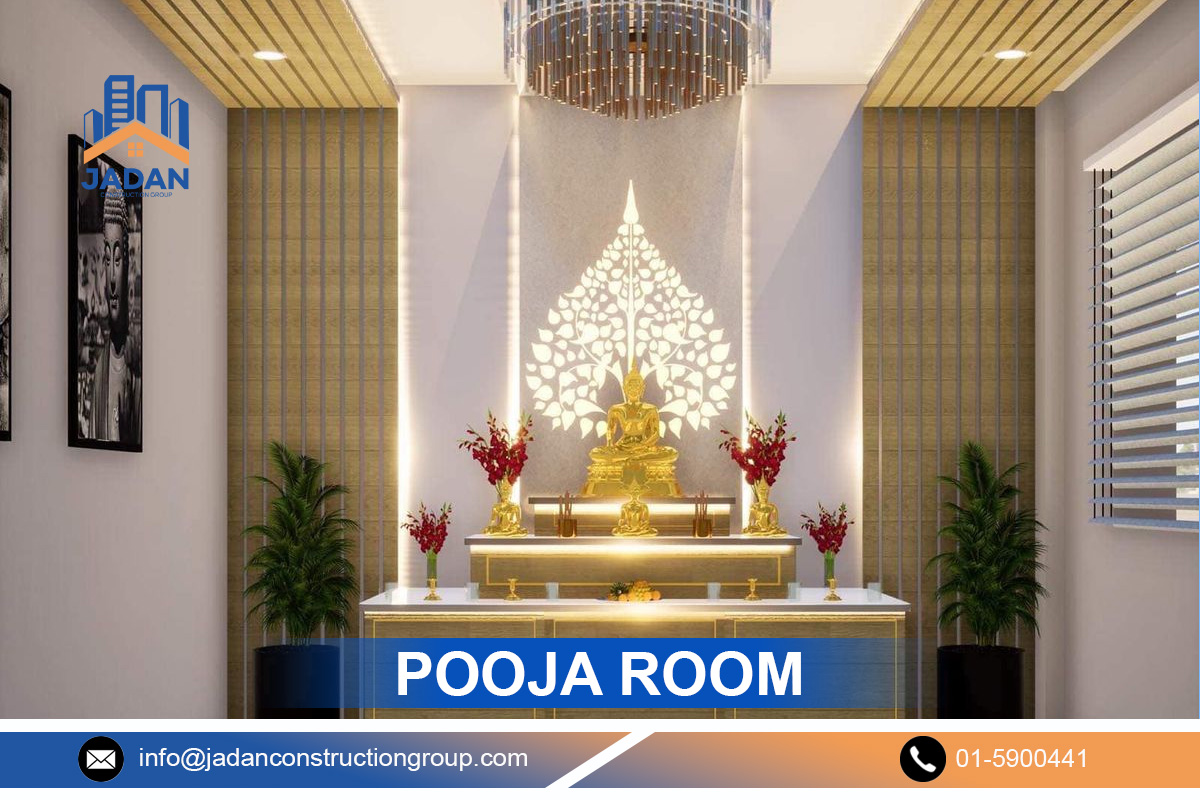
The puja room is the spiritual center of the home in Nepal. It is the only place in the home where the din and noise of life are supposed to be silenced. Yet, in so many homes we visit, the puja room or mandir is an afterthought, stuck in a corner under the stairs, or placed wherever space is available after everything else has been designed and built.
With Vastu Shastra, we receive practical guidance on designing and positioning your puja room so it functions as intended. Most of this advice is simple and requires no additional cost if followed during the home's design stage. It is only when we try to implement this after the home is built that we run into difficulties and costs.
In Nepal, we find that many families have a dedicated room for their puja, especially in the bigger homes, but most families, especially in the city, in their apartments in Kathmandu, use a wall-fixed mandir or a puja corner in the living room, and both are perfectly acceptable, provided we follow the Vastu Shastra advice correctly for the design we are using.
Best Direction for Your Puja Room
However, it should be understood that all directions are not equally potent in Vastu, and it is of utmost importance in the room where space is everything, the puja room.
Northeast (Ishan Kona): This is perhaps the most auspicious position for your prayer room or puja room. The northeast corner of your home is associated with spiritual clarity, divine energy, and positive vibrations. If you are planning to build your home, it is recommended to keep this space secure in your floor plan before you begin to design anything else around it. Puja room northeast Vastu is the ultimate in Vastu, and when it is possible, it should be your top priority.
East and North: If it is not possible to keep your puja room in the northeast corner of your home, then east or north is also acceptable in Vastu for your prayer room or mandir.
Directions to Avoid: South-facing placement for your prayer room or mandir should be avoided at all costs in Vastu. The southwest corner of your home is associated with grounding energy, which is best placed in your master bedroom but should be avoided in your prayer room or mandir. The Brahmasthan of your home, the middle of your home, should be kept free of any permanent fixture or mandir.
Mandir Placement Rules: The Most Important Decisions
The positioning of the mandir in your puja room is as important as selecting the room itself. These are the guidelines people tend to overlook, and they are the ones that cause the most problems in the homes we work with.
Mandir height and arrangement: Place the mandir on a raised platform/shelf, preferably two to three and a half feet above the floor level. The idols must not be placed directly on the floor. The mandir must not be placed at floor level in a low cabinet, nor under the staircase.
Idol Positioning: Keep some space between the idols and the back wall rather than placing them flat against it. The idols must not be placed directly opposite each other; each idol must be given its own space.
Direction to Face While Praying: The direction in which the prayer must be offered is towards the east or the north. The reason we face the east direction during our morning prayers is that we align ourselves with the rising sun and its energy, which is the most auspicious direction.
To make it easy to face the correct direction, the direction in which you face the mandir must be south or west, and the wall on which the mandir is placed must be such that when you stand in front of the mandir, you face the east or the north direction.
Cleanliness and Daily-Use Setup: The puja room must not be used for storage. A separate shelf must be arranged for incense sticks, diyas, and other puja items. A window on the east and/or the north wall is essential to keep the room light and airy, and alive with energy.
Puja Room Design Ideas for Nepal Homes (Modern + Traditional)
Modern-day Nepali homes, especially apartments, benefit from effective, logical thinking when designing spaces that harmonise with Vastu Shastra principles. This is because the designs are appropriate for the spaces we construct.
Small-Space Mandir for Apartments: A wall-fixed wooden cabinet in the northeast corner of the living area is the best choice for small apartment spaces. It would be best to choose a cabinet model where the doors can be fully closed so the area within the mandir remains spotless even when there are visitors at home.
It is very important to consider natural lighting in the home more than we think. A small window in the eastern direction near the mandir area would bring in more positive energy at no extra cost.
Partition Mandir Concept: A half-wall, wooden screen, or decorative jaali partition in the living and dining area can be an effective way to create a well-defined area for the puja space within the home. This concept is increasingly popular in modern-day Nepali homes and is effective in both hill-town and Terai-style home designs.
Lighting, ventilation, and storage: Ensure that the mandir is well lit with soft, warm lighting, such as yellow or golden lighting. Avoid using cool white LED lighting directly above the idols. An enclosed little drawer or cabinet below the mandir can be very helpful in storing puja items such as ghee, kum kum, incense sticks, and prasad containers, etc. If possible, include a little ventilation or a skylight above this area so that it does not look cramped or damp.
Materials and finishes: Wood and stone are tried and tested materials in Nepal’s climate for making a mandir. Teak, sal, white marble, and light-colored granites are good choices for making a mandir, as they look good with most home designs and are easy to maintain. While designing your home’s exterior and interior with our team, do not forget to mention the materials for the mandir so that it does not look like an afterthought at the end.
What to Avoid Near the Puja Room
These are the scenarios you are most likely to encounter in existing Nepali homes, and these are the ones homeownersAsk planning new builds tends to ask the most.
Toilet right next to the Puja Room: If the bathroom and puja room share a wall, or if the toilet is directly above or below the puja room, Vastu deems it a very inauspicious configuration. In Nepal’s small living spaces and multi-layered homes, the toilet near the puja room is one of the top search results, and for good reason.
It is often the result of a design process in which the puja room is an afterthought. If you are in a home with this configuration, you can try adding an Om or Swastik on the shared wall and burning incense regularly to correct it. The real fix is to correct it in the design phase before the drawing is final and irreversible.
Puja Room Under a Staircase: The presence of a staircase means there is always traffic and a certain amount of pressure directly above the space, which tends to squish the space beneath it and make it energetically unstable. This is one of the more common Vastu concerns in Nepali homes, and the answer is easy: avoid it if you can. If you are in a home with your mandir under the stairs, the best fix is to move it to a wall-mounted shelf in the northeast corner of your living room.
Puja Space in the Bedroom: Having a mandir in the bedroom is not a good idea, as this mixes the peacefulness of sleeping with the active puja vibrations. If you still want to keep your mandir in the bedroom, then place the mandir on the east or north wall of your bedroom, but always make sure to cover the mandir with a curtain or a cabinet door before sleeping.
And if you are facing a situation where your bedroom doubles as a puja area, then check out our bedroom Vastu guide for Nepal, where all the rules regarding the bedroom are explained in detail.
If You Can't Place the Puja Room Ideally: Practical Fixes
We do not always find a Nepali home where all the Vastu aspects are perfectly placed. And that is totally okay. Most changes in the puja room can be done without demolishing walls.
Mandir in the Living Room Right Setup: If your living room has a mandir, it is the right setup. Place the mandir on the northeast wall in the living room. Do not place it in the corner and ensure the corner does not face the south direction. Keep the area around the mandir free from other items. It is best to place the mandir in a cabinet and close the door or use a curtain so the sanctity is maintained when the door is closed and during meals.
Using Partitions and Screens: If your living room is open plan and the puja area is open as well, use a wooden screen, a glass panel, or a jaali screen as a divider between the living area and the puja area. This is the easiest way out and the best way to solve the problem in open-plan living spaces.
Re-Orienting the Mandir Inside the Room: If the puja room is not in the right direction, then the position of the mandir inside the room can be adjusted. If your puja room is in the south direction, and the mandir is placed in the south direction in the puja room, then the direction will be right when praying because the direction will be north.
If your home is being constructed from scratch or renovated entirely, this is the time when the puja room placement needs to be done correctly from the beginning. Our team at Jadan Construction Group makes sure the placement and the direction are done correctly as part of the house construction planning before the actual building begins.
Conclusion
Puja room Vastu is not about following the rules. It is about paying proper attention to the most sacred part of your home from the very beginning. It is about the direction, the height of the mandir, and the things placed adjacent to the mandir. All these aspects can be taken care of with proper planning. Otherwise, it will be difficult to make corrections once the structure is complete.
At Jadan Construction Group, we understand the importance of the small changes that can be made to the puja room to transform the feel of the space. This is what we focus on from the very beginning of our conversations with our clients about the floor plans. We understand Nepali homes and how the plots of the land face the diverse landscapes of the country. We can help design spaces that function beautifully on every level.
Let’s get it right from the ground up. If you’re ready to start the process of designing your puja room and your home, please let us know the details of your plot of land and we will be happy to assist you.
Frequently Asked Questions
What is the best direction for a puja room in Nepal?
The best place for the puja room in Nepal is the northeast corner of the building, which is known as the Ishan Kona. If this is not feasible, then the next best places are the rooms that are in the direction of the east and the north. It would be best to avoid the direction of the south and the southwest.
Can the puja room be in the living room?
Yes, this is possible. A living room mandir is very common in Nepali homes. It would be best to place the living room mandir in the northeast direction and the north direction. It would be best to place the mandir in the living room and keep the area neat and clean. It would be best to cover the area when not in use by using a cabinet door.
Can a puja room be placed under a staircase?
No, this would not be very good according to Vastu principles. It would be best to place the puja room on a wall-mounted shelf in the northeast direction.
There is a toilet above or below my puja room. What should I do?
This is a very common problem in small homes in Nepal. If it is not feasible to change the position of the toilet and the puja room, then it would be best to place the Om symbol on the wall and use incense sticks regularly and keep the puja area spotlessly clean. It would be best to plan the separation of the toilet and the puja room during the initial stages before the construction of the building.
Which direction should we face while praying?
It would be best to face the east direction when praying in the puja room. Facing the north direction would also be good. It would be best to place the mandir in the direction of the south and the west so that when standing in front of the puja room, the direction would be the east and the north.